


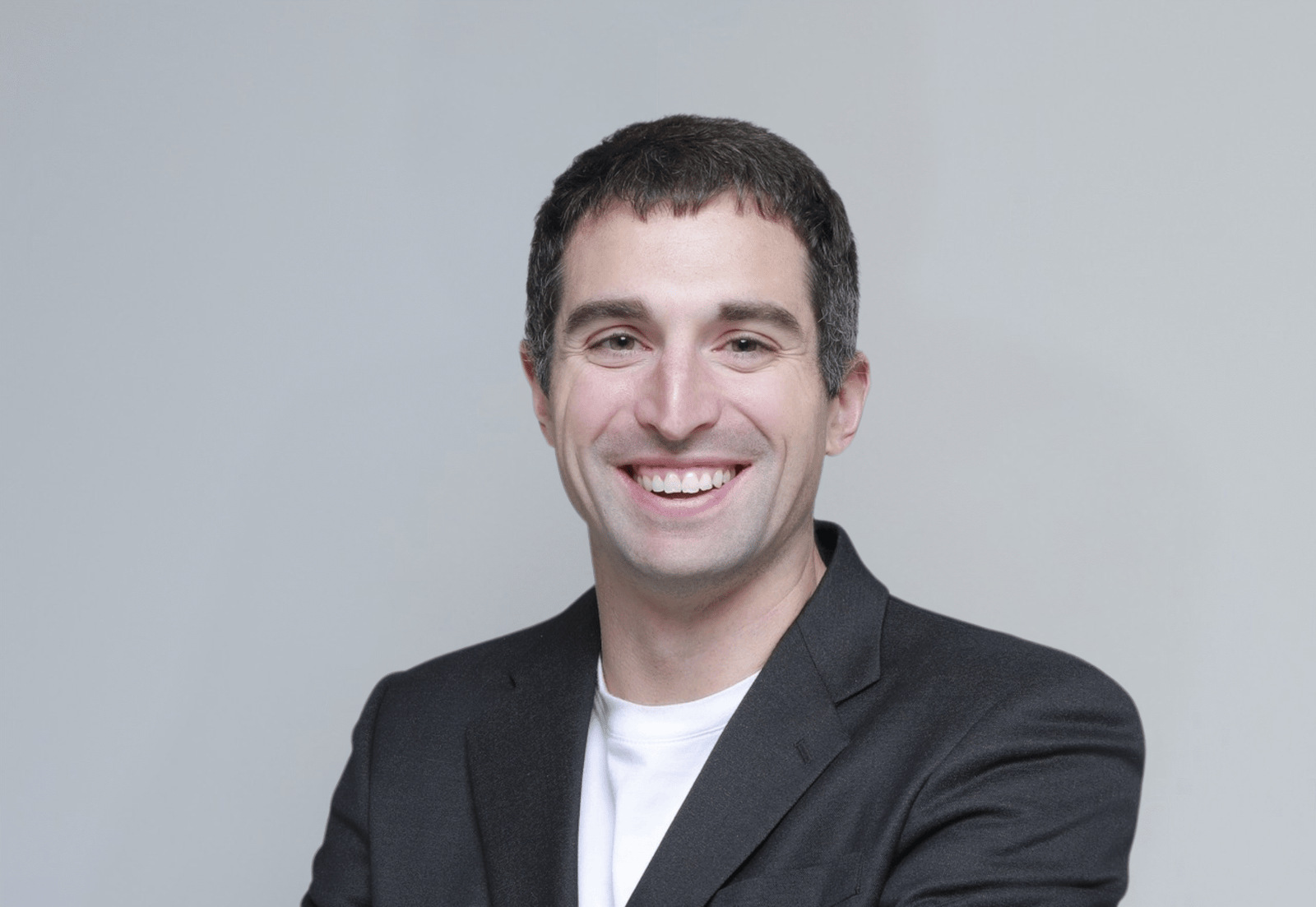
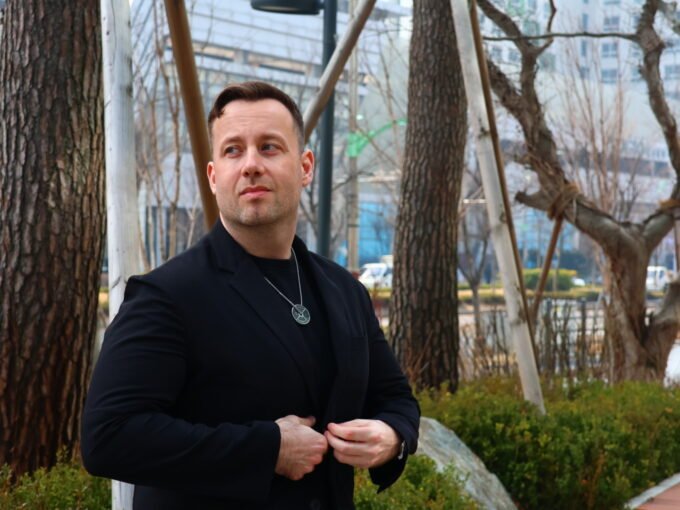
Ryan Thompson shares how communication, confidence, and consistent action can help people find their voice and pursue international opportunities.
After building a career in procurement in the United States, Ryan Thompson moved to South Korea and began a new chapter in education and coaching. Through Positive English Coaching, he now helps Korean professionals strengthen their communication skills, build confidence, and prepare for international opportunities. His work is grounded in a simple belief: people do not need perfect English to contribute, connect with others, or make their voices heard.
The goal isn’t perfect English. The goal is keeping the conversation moving.
For readers who are meeting you for the first time, how would you introduce yourself and the work you do today?
In a word, confidence. I help people work through their thoughts and ideas so they become more confident communicators. I’m naturally curious about what people are passionate about, so I start there and expand outward, always connecting it back to where they actually want to go.
My Master’s in Positive Coaching gave academic grounding to ideas I’d already been using instinctively. And living and working in South Korea for almost ten years means I understand both cultures, not just teach English as an outsider looking in.
Before moving to South Korea, you built a career in procurement in the United States. What did that period teach you about business, communication, and working under pressure?
I never imagined procurement would become one of my greatest strengths as a coach.
Those two years taught me how businesses actually work. I remember not understanding engineering specifications, safety standards, and procurement processes. Engineers had to explain complex ideas to me in simple language.
Ten years later, I tell Korean engineers that their challenge often isn’t English. It’s explaining technical expertise to someone who doesn’t share their knowledge.
Procurement taught me stakeholder alignment, communication, and that simple language is often the most effective language.
What first brought you to South Korea, and what made you stay for more than nine years?
At first, I wanted something different from the traditional corporate path. I wanted to experience another culture and another way of living.
What kept me here was something much deeper.
The challenge of building a life, business, and identity in another country became part of who I am. The person I became through living in Korea is the reason I stayed.
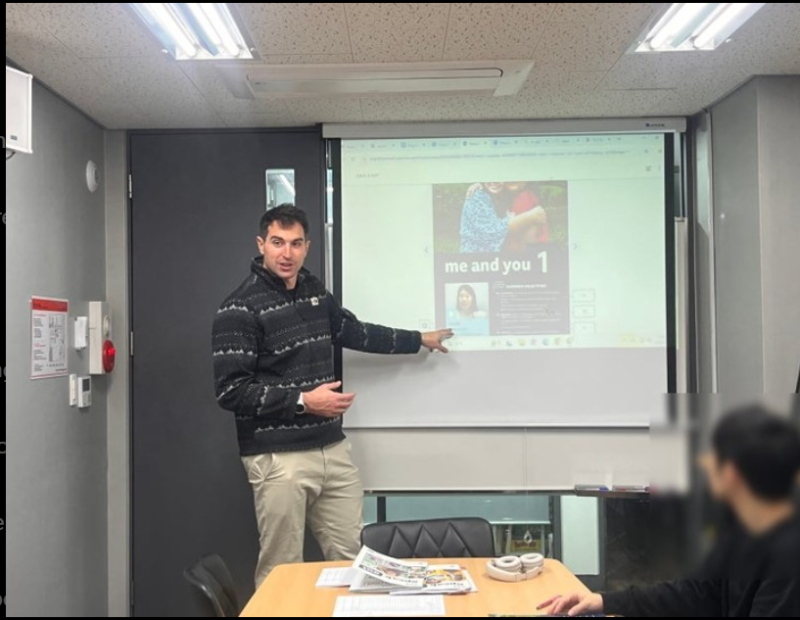
Looking back at your early years in Korea, what was the biggest personal or professional adjustment you had to make?
At first I tried to completely adapt. I listened to elders, said yes to everything, turned off my judgment, and tried to live exactly like everyone else.
It took a while to notice what that was costing me. I was fitting in, but I wasn’t really there. Eventually I returned to my own nature.
Today I challenge ideas, ask questions, and build the life I want, but hopefully in a way that is respectful, kind, and true to myself.
You moved from procurement into education, coaching, and entrepreneurship. Was there a specific moment when you realized you wanted to build a different kind of career?
There wasn’t one single moment. When I arrived in Korea I realized something strange. I woke up on Monday excited to go to work. That never happened in corporate America. COVID gave me time to connect the soft skills I had developed with the academic research from my Master’s. That eventually became Positive English Coaching.
What did you see in the Korean professional environment that led you to create Positive English Coaching?
The biggest issue wasn’t English. It was confidence. People judged themselves before anyone else did.
Many had excellent grammar but couldn’t work through ideas in real conversations. Grammar matters. But communication is a two-way street. I wanted to create a place where people could think, experiment, make mistakes, and develop confidence through communication.
Many Korean professionals have studied English for years, yet still hesitate in meetings, interviews, presentations, or international business situations. From your experience, what is usually holding them back?
Fear of making mistakes. Too much self-judgment.
The tragedy isn’t making a mistake. The tragedy is never contributing.
Even if you make an unforgettable mistake, you’ll probably learn from it and laugh about it years later. Remaining silent is far more costly.
Your work combines language, coaching, confidence, and cross-cultural communication. How do you help clients move from knowing English to actually using it in high-pressure professional situations?
We use real situations.
We prepare for meetings.
We analyze meetings that already happened.
We anticipate meetings that are coming.
Instead of practicing textbook English, we troubleshoot real business communication.
If someone doesn’t know what to say, they can always ask another question, seek clarification, or buy themselves time. The goal isn’t perfect English. The goal is keeping the conversation moving.
The tragedy isn’t making a mistake. The tragedy is never contributing.
What are some of the most common communication challenges Korean professionals face when working with international clients, partners, or teams?
The biggest problem isn’t English. It’s pretending to understand.
People are often afraid to admit they don’t understand or to rephrase what they heard. But clarifying and checking understanding aren’t signs of weak English. They are what skilled communicators do constantly, in any language.

How has your own experience as an American living and working in Korea shaped the way you coach Korean professionals?
I teach from the other side of the river. I know what it’s like to struggle with another language.
When students complain about articles like “a,” “an,” and “the,” I compare them to Korean particles like 이, 가, 을, 를. Living through another language has made me more patient and empathetic.
What do you think international professionals often misunderstand about Korean communication culture?
Be careful about learning Korea through YouTube, dramas, or even something you read here. Put it in the memory bank, sure, but your individual experience could be very different from the stereotypes or general culture you’ve heard about.
Every time I think, “Koreans are like this,” life gives me another experience that completely breaks that stereotype.
Korean society also changes fast. The countryside experience I had ten years ago could look very different in 2026 and beyond. Companies, teams, and individuals often matter more than national stereotypes.
Confidence is a major part of your work. How do you define confidence in a professional communication context?
Confidence is the ability and follow-through to say what you want to say when you want to say it. Confidence comes through action. Not before it.
Can you share a client story or example that shows the transformation you aim to create?
I feel most proud when my clients don’t need me anymore. If I’ve done my job well, they stop thinking about me. They simply communicate. The best coaching creates independence.
You are also building One Way Grit. Can you tell us more about it?
One Way Grit is my place to document endurance, Korea, and personal development. Endurance races are a metaphor for life. Every race contains problems, emotions, setbacks, and victories. The finish line is clear. The path constantly changes, but we’re always on that one path, because we can’t clone ourselves. Yet.
Those lessons apply equally to entrepreneurship, coaching, and life.
The important comparison is becoming a little better than yesterday.
How has endurance training influenced the way you think about business, coaching, and personal development?
Play the long game. Focus on the process. There will always be people ahead of you.
Sometimes comparison motivates you. Sometimes it hurts you.
The important comparison is becoming a little better than yesterday.
The word “grit” is often used loosely. What does grit mean to you?
Grit isn’t just pushing through. Recovery is part of grit. Self-awareness is part of grit.
Sometimes grit means stopping, recovering, and changing direction a few degrees while staying committed to the same destination.
After nearly a decade in Korea, how has your definition of success changed?
When I graduated, success meant money, finance, and climbing the corporate ladder. Today success means meaningful work, autonomy, mental health, physical health, and continuing to grow.
I remember buying my mom a necklace when I was in university that said, “The journey is the destination.”
At the time I understood it intellectually. Now I understand it through experience.
The school system rarely hands you that kind of understanding. If it isn’t going to, the responsibility falls on you, to optimize the time you have and figure it out for yourself.
What are you building next with Positive English Coaching and One Way Grit?
I’m building ideas, systems, and frameworks that outlast individual coaching sessions. I’m currently polishing a short book called Staying, a collection of ten essays about my first ten years in South Korea. I hope to build work that continues helping people long after they have finished reading or left one of my coaching sessions.
What skills will matter most for Korean professionals in the coming years?
Authenticity. AI is here and it’s not going anywhere. Our experiences remain uniquely human.
The future belongs to people who discover where their natural strengths, curiosity, and contribution intersect.
Don’t ask AI to become you. Use AI to become more of yourself. And don’t use it in a silo. Use it, then go out into the real world and test whether it’s actually right.
What would you like readers to take away from your story?
My grandmother always said, “Everything in moderation.” At the time I laughed.
Looking back, I probably haven’t lived a moderate life. I have spent ten days in silent meditation and run 100 km through the mountains. But I have learned moderation in another sense. I have become less extreme in my thinking.
In an online world full of outrage and certainty, moderation often gets ignored. I hope people realize they don’t need the loudest voice or the most extreme opinion to make a meaningful contribution.
Sometimes you simply need to stop, reflect, synthesize your experiences, share what you have learned, and then quietly get back to work.
To learn more about Ryan Thompson’s work in English coaching, professional communication, confidence, and personal growth, connect with him on LinkedIn.
Interview by Vasiliki Panayi, Founder & Editor-in-Chief of The Global Founder.






Leave a comment