


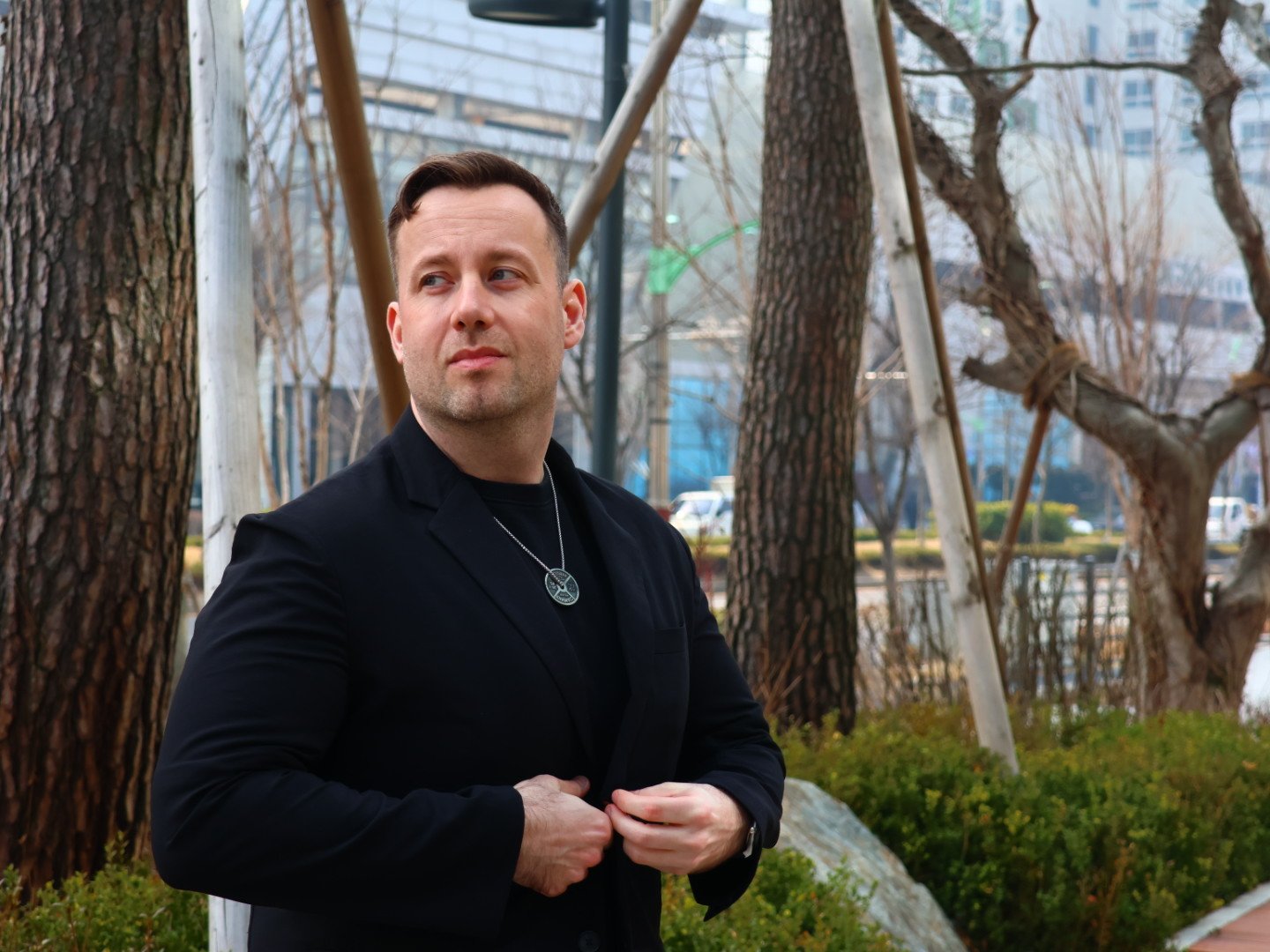
A conversation on international education, professional growth, and what working in Korea reveals about global business.
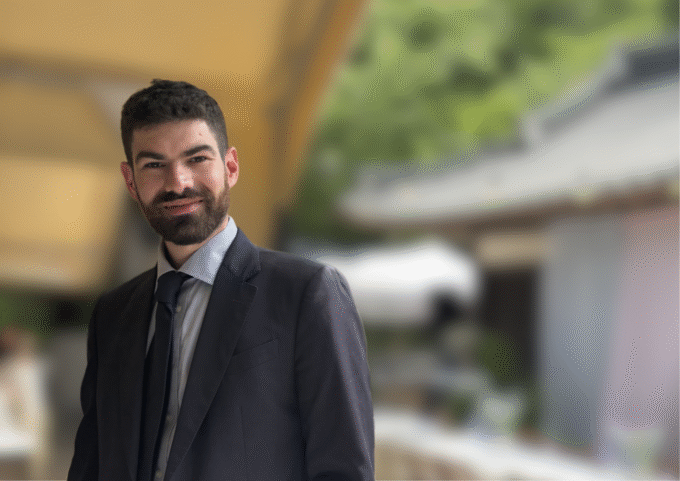
Mark Balneger did not set out to build a career in international education. Originally from the Netherlands and with a background in marketing, his connection to Korea began through an unexpected study abroad opportunity, one that would later shape both his professional path and his broader outlook. Today, as Head of Market Development at Better Tech, he works at the intersection of student mobility, partnerships, and international growth, helping bring a more modern approach to a sector that still carries many traditional ways of operating. In this conversation, he reflects on the experiences that brought him here, what working in Korea has taught him, and how international careers can expand not only professional horizons, but personal ones as well.
I had to go outside my bubble, and then my bubble grew bigger.
Mark, could you introduce yourself and tell us what you do at Better.
My name is Mark Balneger, and I’m, head of market development at Better Tech. We are creating technical solutions for everybody working in international student mobility. So universities, learning institutions, student recruiters and other service providers related to that industry basically.
For those who may not be familiar with Better, how would you describe the company and the role it plays in this space?
They are definitely innovators. My team is made up of veterans in this industry. They saw things they did not like, or felt could be done better, and that is why they started this company: to help an industry that is still quite old-school and traditional move into the modern world.
What does your role involve in practical level? What does your work actually look like day to day?
I was first sort of headhunted for a position focused on regional partnerships, so my role was Regional Partnership Manager for Korea. Then, because I’m from Europe, it soon expanded into Korea and Europe, and now I’m Head of Market Development for the company. This industry is very relationship-based, so my day-to-day work is constantly about building and improving relationships. At the same time, since we are a small team, I’m also involved in business development, strategy, and new products. But my role is mostly customer-facing. I call myself – and my coworkers still call me – the “White Monkey” because I’m always out in front, dancing for the people. I like talking to people and managing relationships. So that is, I think, in a nutshell, what I do.
What first drew you to the International education and student mobility space?
Actually, I had no idea about it before I was asked to join. I was like, “Education?” My background is in marketing, and I had nothing to do with education, but the person who recommended me thought it would be a good fit, since I had also been an international student myself. And they were correct, basically.
There’s opportunity everywhere. You just have to know how to find it.
Can you walk us through your professional background and how that path led you to the work you are doing today?
That’s a long story; quite an interesting story. It takes me back to college. I was studying International Marketing Management in the Netherlands, and because it was a global bachelor, or an international bachelor, we had to do a mandatory study abroad. I picked five places I wanted to go, like Canada, the US, Japan, and two other countries, maybe in Europe. Then my school called me and said, “Everything you picked is full.” I was like, “Do I have to wait a year? What is the plan?” Then they asked me if I wanted to go to Korea, and that is how I ended up in Korea for the first time, as an international student. I fell in love with Korea and liked it. Then, in 2015, I came back to Korea on a working holiday visa. My first job in Korea was in a whiskey cigar bar. It was fun, it paid the rent, and one of my coworkers worked in Korean entertainment, in acting, dramas, and movies. That is how I got into that industry as well. I worked in the Korean entertainment industry for a couple of years, and then I found a job at a Korean startup in their global marketing department. That was really the start of my career in Korea, basically.
From your perspective, what are some of the biggest barriers that still exist for students and institutions trying to access international education?
Trying to internationalize, lack of information is one thing. Then there are constantly changing visa regulations and policies, either from governments or from universities as well, which makes it tricky.
What has stood out to you most from your experience of working in Korea?
What stood out most to me is that it is definitely different from the Netherlands. In Europe, we have more work-life balance, and in Korea they seem to forget about that, although it is changing. More people are standing up for themselves now. Unpaid overtime in the Netherlands would not make any sense, whereas in Korea it is the norm. And the hierarchy, or the constant drinking after work; although that is also going down in Korea, it was definitely new to me.
One thing I realized when working in a startup was that we had a company meeting and the boss was angry about something. They were saying, “This and this and this; we need solutions for this.” Then I raised my hand because I had an idea, since in the Netherlands it is very horizontal. One of my coworkers stopped me and said, “This is not the time to give your idea. You have to wait.” So it is sort of a façade. They are angry and asking for solutions, but nobody gives ideas, and we do not discuss things as a team. You have to go through this very vertical, tiring chain, which is very inefficient in my opinion. I prefer horizontal hierarchies. If you are working in a Korean company, whether it requires you to speak Korean, English, or any other language, that hierarchy system is still one of the biggest things in working in Korea.
Korea has a very distinct business environment. What differences have you noticed when working here compared to other markets?
They are very slow. I have been working especially with Korean universities, and even universities here are more archaic. The hierarchy is even more vertical. So when it comes to starting something new or introducing innovation in higher education, it takes a long time for people to adapt or for someone to take a chance, because they have been doing things a certain way for so many years. It is hard for them to try something new. But now they have no choice anymore, because all Korean universities, or most Korean universities, are struggling with admissions, both domestic and international. So they need to try new things, at least to help their universities survive.
For professionals outside Korea who may be considering building a career here, what opportunities do you think they often overlook?
When people think of starting a career in Korea, most of them just think about Seoul. But there is opportunity everywhere; you just have to know how to find it. Every region wants to revitalize itself, and every government and local government wants to do that, so they are supporting people who want to contribute. Those opportunities are available outside of Seoul. But if your goal is just, “I want to live in Seoul,” then you miss all the opportunities that Korea has to offer, in my opinion.
Korea is a roller coaster of emotions and challenges. That’s why I like it.
At the same time, what challenges should they be prepared for?
That depends on which country they are coming from, basically. Korea is not an easy place to live. I am from the Netherlands; everything is easy there, in my opinion. And it is also very boring, because my personality does not like easy. Korea is a roller coaster of emotions and challenges. That is why I like it. You have to be ready for that, especially if you come from safe and cushy Western markets. Korea can be challenging, but you have got to go with the Korean flow, as I like to say. You should not go against it, basically.
A large part of your work involves operating across markets and cultures. What has that experience taught you about international business?
I had the luck that when I was studying at university, we had a course called Intercultural Sensitivity, which prepared me a lot for this work already, even though I did not know I would end up here. Every culture has its own rules or values. If you want to do business with people from another culture, you have to learn about their values and find a balance between keeping your own and respecting those of the other culture.
What advice would you give to professionals who want to build careers that are genuinely international in scope?
Never stop learning. I guess that sounds very cliché. International in scope means you have to become more open-minded yourself. You also need to be aware that if you are going to do more things internationally, the view you have of yourself will evolve when you start doing things outside your little bubble, and then you will grow as a person.
It is not easy. For me, it started when I became an international student. I had to go outside my bubble, and then my bubble grew bigger. Then I tried to go back home, but those people’s bubbles had not grown, so I felt disconnected from them. So be ready to lose people, meet new people, and gain new people. Life begins at the end of your comfort zone.
Looking ahead, what excites you most about the future of international education and global collaboration?
I feel that now everybody has the opportunity to learn anything, anywhere. Personally, I think my life would not be like this if I had not been an international student, and I want everybody to be able to experience being an international student. It really makes you a better person, or at least more aware of what is going on around you. You can stay in your little bubble, but then you are not experiencing life to the fullest.
Connect with Mark
To learn more about Mark Balneger’s work in student mobility, international market development, and building a career across cultures in Korea, visit BetterOS connect with him on LinkedIn.
Interview by Vasiliki Panayi, Founder & Editor-in-Chief of The Global Founder.




Leave a comment