


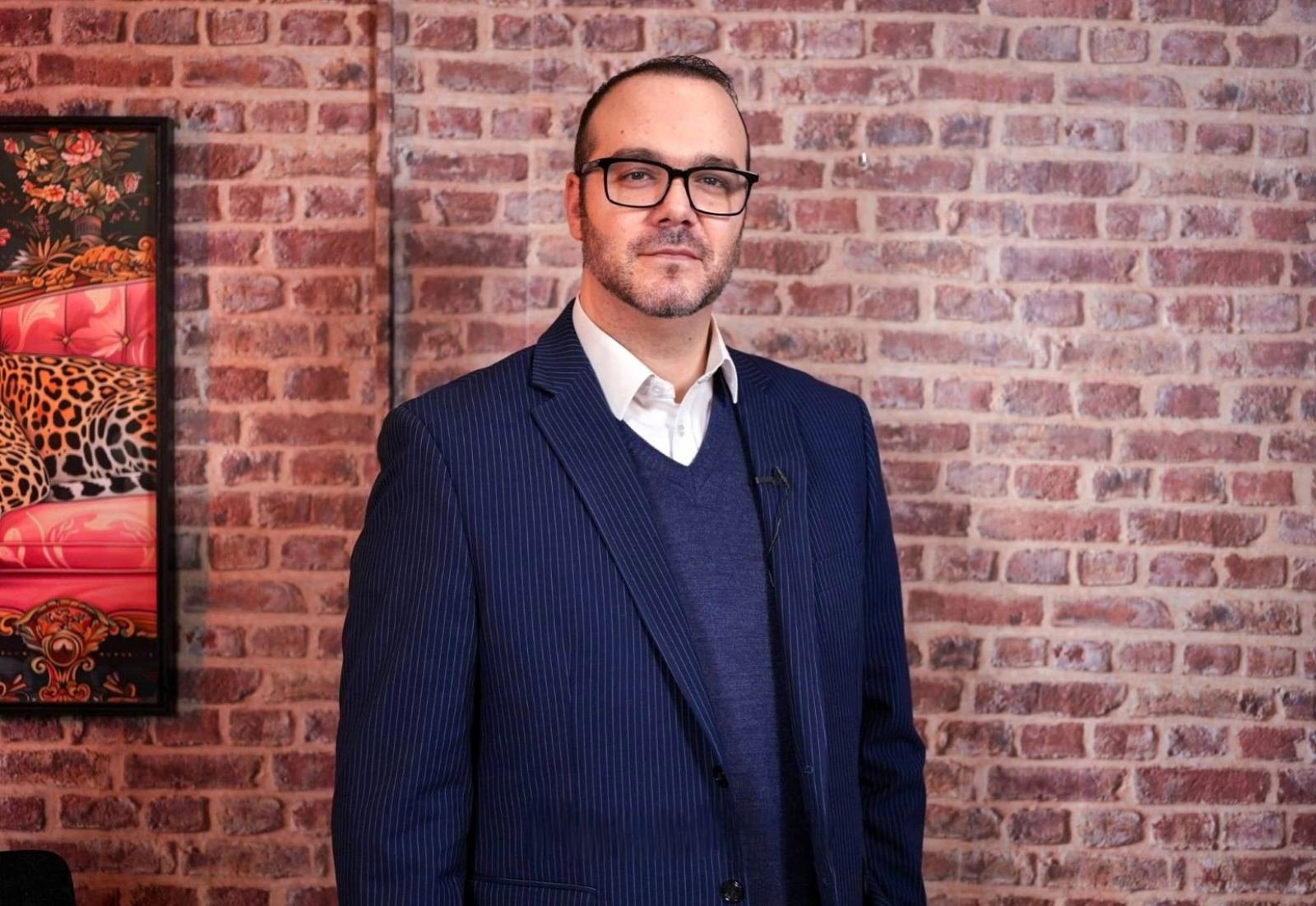
George Ayiomamitis unpacks what internationally active individuals and families should know about tax planning, residency, and building a practical Plan B.
For internationally active individuals and families, tax planning, residency, and cross-border structuring are no longer niche concerns. They have become essential parts of long-term financial and personal planning. As global mobility increases and more entrepreneurs, investors, and professionals operate across multiple jurisdictions, understanding how to structure one’s affairs efficiently and securely has never been more important. In this conversation with international tax planning advisor George Ayiomamitis, we explore the fundamentals of tax planning and corporate structuring, the growing relevance of “Plan B” strategies, and why jurisdictions such as Cyprus are increasingly entering the conversation.
International tax planning is not about avoiding taxes. It is about structuring your affairs in a way that is efficient, compliant, and sustainable in the long term.
What is tax planning and what is corporate structuring in simple words?
As an advisor in this field, I often find that the most important part of my job is demystifying these concepts. Many people hear “tax planning” and think of complex loopholes, but in reality, it is about efficiency, protection, and foresight.
At its core, corporate structuring is the “architecture” of a business. Just as an architect decides where the walls and foundations of a house should go to make it sturdy, we decide how companies, branches, and holdings should be organized to make the business resilient.
Tax planning is the strategic process of organizing those “rooms” in a way that ensures you are not paying more tax than the law requires. It involves looking at the timing of income, the size of expenditures, and the specific tax laws of different countries to ensure everything is optimized.
Practically though, why should businesses and individuals consider it?
There are three primary reasons why this is a critical exercise:
Financial Efficiency: Money lost to unnecessary tax leakage is money that cannot be reinvested into the business, used to hire new employees, or saved for retirement. Efficient planning maximizes your cash flow.
Risk Mitigation: Laws change constantly. A good structure protects you from “surprises” like sudden tax hikes or changes in international regulations. It also provides asset protection, keeping your personal wealth separate from your business liabilities.
Global Mobility: In today’s world, businesses and families are no longer tied to one spot. If you sell products in the US, manufacture in Vietnam, and live in Portugal, you are interacting with three different tax systems. Without a plan, you risk double taxation, paying tax on the same dollar in two different countries.
The Golden Rule? Tax planning is not about “evading” taxes; it is about compliance and intelligence. It’s the difference between blindly following a path and using a map to find the most efficient route to your destination.
You mentioned “Global Mobility”. It is indeed true and we have also seen an increase in both businesses and individuals (often with their families), relocating to other countries. What in your opinion is the main reason behind such a decision?
“Global Mobility” is more than just a trend; in 2025 and I’m sure it will continue in 2026 also, it has become a fundamental strategy for wealth preservation and business resilience. We are currently seeing record-breaking numbers of high-net-worth individuals and entrepreneurs relocating, not as a “runaway” move, but as a proactive “Plan B” in an unpredictable world.
While every story is personal, the motivations generally fall into three categories:
Risk Management & Stability: Geopolitical uncertainty and shifting domestic policies (like the recent changes to “non-dom” regimes in countries like the UK) act as a major trigger. People move toward “safe harbors”, jurisdictions with stable legal systems, predictable tax laws, and strong property rights.
Fiscal Optimization: It’s a rational response to rising tax pressure. By moving to jurisdictions with territorial tax systems (where you are only taxed on local income) or specific incentives for new residents, individuals can significantly increase their “net” wealth for reinvestment.
Generational Legacy: For families, relocation is often about the children. They look for “mobility portfolios” that offer access to world-class education, superior healthcare, and a safer environment, ensuring that the next generation has more global opportunities than the last.
Whether it is for business or personal reason, relocation is not an easy decision to make. What in your opinion should one consider when choosing where to relocate?
Choosing a new home is a multi-dimensional puzzle. I advise my clients to look at these 4 pillars:
The “Center of Vital Interests”
Tax authorities no longer just look at how many days you spend in a country (the old “183-day rule”). In 2026, they look at where your life actually happens.
Question to ask: Is my family with me? Do I have a permanent home here? Is my social and economic life truly rooted in this new location?
Substance over Form
You cannot simply “paper” a relocation. If you move your business, you must have “substance”—an actual office, local employees, or management and control happening on the ground. Modern tax transparency (like the Common Reporting Standard – CRS) means tax offices around the world talk to each other. If your structure lacks “meat on the bones,” it may be ignored by authorities.
Exit and Entry Costs
Moving isn’t free. Some countries charge an Exit Tax when you leave, effectively taxing “unrealized” gains on your assets.
My Tip: Always analyze the “cost of leaving” your current country before falling in love with the “benefits of entering” a new one.
Quality of Life & Infrastructure
A 0% tax rate is meaningless if you cannot find a good school for your children or a reliable hospital. The most successful relocations we see are to places like the UAE, Singapore, Switzerland which balance tax efficiency with world-class infrastructure, or Cyprus, if you would also like to add the Mediterranean lifestyle in the mix.
To conclude, relocation should never be a “reaction.” It should be a “transition.” The most successful moves are those where the assets and corporate structures are repositioned months -or even years- before the family physically boards the plane.
In your recommended list of jurisdictions, you have also mentioned Cyprus. What is it in your opinion that Cyprus has to offer to international businesses, start-ups, entrepreneurs or investors?
Cyprus is indeed a jurisdiction I know intimately, and it is no coincidence that many of my global clients, and indeed my own practice, are based here. Unquestionably, the island has solidified its position as the premier “tech and business hub” of the Eastern Mediterranean.
What makes Cyprus unique is that it doesn’t just offer lower tax rates when compared to other jurisdictions; it offers a comprehensive lifestyle and business ecosystem that is fully compliant with EU and OECD standards.
A tax structure is a tool, but a second residency is an insurance policy.
Sounds good, but why one to specifically choose Cyprus?
If I had to explain the “Why Cyprus” to a client in just a few sentences without the technical details, here is how I would break it down:
It’s “Business Friendly,” not just “Tax Friendly”
While Cyprus has one of the lowest tax rates in Europe, the real draw is how easy it makes your life. It uses a legal system that international business owners already understand and trust. It’s a place where you can set up a company, protect your intellectual property, and trade globally without the red tape you find in other European countries.
It offers a Massive “Head Start” for Entrepreneurs
If you move your life here, the “Non-Dom” rules mean that for 17 years, the money you take out of your company as dividends is essentially yours to keep, tax-free. For a startup or a growing business, that’s a huge amount of capital you can reinvest into your dreams rather than giving it away.
Protection That Lasts Generations
Through the use of Trusts, Cyprus allows families to put a “safety net” around their wealth. It ensures that what you build today stays in the family and is passed down to your children exactly how you want it to be, without long court battles or strangers seeing your private business.
A Place Where People Actually Want to Live
Ultimately, you aren’t just moving a file; you’re moving a life. Cyprus offers a “Plan B” that feels like a “Plan A.” It’s safe, sunny, and English is spoken everywhere. It has great schools and is located right at the center of the map. In a world that feels increasingly unstable, Cyprus offers a predictable, high-quality “anchor” for both your business and your family.
Bottom Line: Cyprus is the bridge where professional efficiency meets a high quality of life. It’s about working in a world-class business hub while living in a place that feels like a permanent vacation.
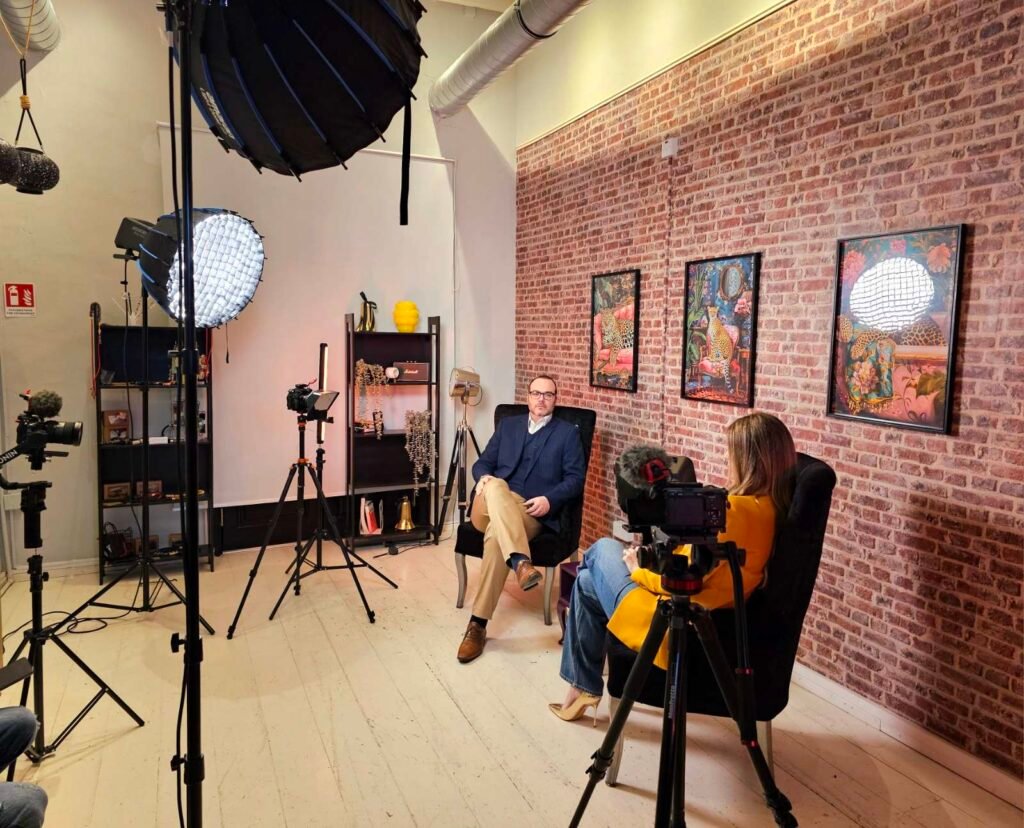
In a world that feels increasingly unpredictable, you often talk about a ‘Plan B.’ How does a well-structured international plan act as an insurance policy for a family’s future?
It’s a common misconception that people move just to see a higher number in their bank account. In my experience, especially lately, relocation is about freedom and security.
I often tell my clients: ‘A tax structure is a tool, but a second residency is an insurance policy.’ Think about it this way:
We are taught to diversify our investment portfolios, yet most people have their business, their home, their bank account, and their children’s future all in one single country. If that country’s economy or political climate changes, their entire life is at risk.
Having a residency in a place like Cyprus or an EU-compliant structure gives you the ‘key’ to a second door. If things get difficult in your home country, whether it’s high inflation, social unrest, or restrictive new laws, you have a place where you are already established, where your children have a school spot, and where your assets are safe.
In 2026, international planning is about choosing your environment. It’s the ultimate luxury: the ability to choose the rules you want to live by.
For an individual who is listening to this and thinking, “I probably need a Plan B,” what are the very first practical steps they should take over the next 6–12 months?
This is an excellent question, because it turns “theory” into “action.” For someone realizing they need a “Plan B” in 2026, the next 6 to 12 months are a high-stakes preparation phase.
If I were sitting across from a client today, here is a 4-step roadmap I would give them:
Strategy comes first – Don’t rush into paperwork. First, define your goal: Is it tax savings, family safety, or a lifestyle change? Assemble a team of advisors in both your current country and your destination. You need them to talk to each other to ensure you don’t get hit with a “surprise” tax bill for leaving.
Then comes the setup – you will need to decide on your residency path (for example if you choose Cyprus, then whether you will be going with the 60-day non-dom tax residency). Also, if you own a business, whether it needs restructuring prior moving.
Third come the logistics, both for the business and personal – the opening of an international bank account (personal and for the business). And with the compliance and KYC checks getting slower and slower every year, the earlier you start the better. Simultaneously, on the personal side you will need to secure school spots, healthcare, etc. A “Plan B” only works if the family is settled and happy.
Lastly, the “Exit” – formally “break” your tax ties with your previous country of residence. This is the most critical step. You must prove to your old tax office that your “Center of Vital Interests” has truly shifted. Keep a file of boarding passes, utility bills, and lease agreements as your evidence.
Could you walk us through a simple, real-world style example of how an entrepreneur might use Cyprus as part of a wider international structure? For instance, how a Cyprus company or holding vehicle could work alongside operations in other countries.
To illustrate how this works in practice, let’s look at a typical structure for a Tech Entrepreneur whom we’ll call “Alex”.
Alex has developed a successful software platform. He has customers in the US and Europe, a development team in Eastern Europe, and he wants to personally relocate to a stable, sunnier climate.
In this real-world scenario, Alex sets up a Cyprus holding and transfers the ownership of his software code to his Cyprus company. Because Cyprus has one of the most advantageous IP Box Regimes in Europe, the profit he makes from licensing this software globally isn’t taxed at the standard rate. Instead, after a series of deductions for his R&D costs, his effective tax rate on software profits can be as low as 3%.
The Cyprus company is the one that signs the contracts with clients in the US and Europe, it pays the development team in Eastern Europe for their services (these are deductible business expenses) and the remaining profit stays in the Cyprus company, taxed at that very low effective rate.
Now, on the personal benefits, Alex physically moves to Limassol (Cyprus) where he rents a sea view apartment and spends at least 60 days a year on the island. The company pays Alex a salary of €100,000. Under the 2026 rules for new residents, 50% of this is tax-free. He only pays income tax on €50,000.
In addition, when the company has profit, it pays Alex dividends. Because of his “Non-Dom” status, Alex pays 0% personal tax on these dividends for the next 17 years.
Lastly and to make this even more interesting, five years later, a large tech giant offers to buy Alex’s business for €10 million. In many countries, Alex would pay a huge Capital Gains Tax on that sale. In Cyprus, the sale of shares in a company is generally 100% tax-free. Alex keeps the full €10 million to start his next venture or ever retire.
For individuals coming from Asia who may not know Cyprus well, what tends to surprise them most when they start exploring it, either positively or negatively?
For individuals relocating from Asian countries like South Korea, China, India, the transition to Cyprus often brings a mix of “culture shocks” – some that provide immediate relief and others that require a significant mental shift.
On the positive side, many Asian professionals are surprised by the clarity of the Mediterranean air and the 300+ days of intense sunshine. The proximity to nature, where you can be at the beach in the morning and a mountain pine forest in the afternoon, is a stark contrast to the dense “urban canyons” of East and South Asia.
Also, the English language – while Greek is the official language, the depth of English proficiency is higher than expected. Because of the British colonial legacy, the legal, banking, and medical systems are almost entirely accessible in English, making the initial “Plan B” setup much smoother than in other EU countries.
Now, of course there are also the challenging surprises that an Asian individual might face. For example, in Asia’s “tiger economies,” speed and efficiency are everything. In Cyprus, the philosophy is Siga-Siga (slowly, slowly). Newcomers are often frustrated by how long it takes to get a high-speed internet line installed, a bank account opened, or a government permit processed. The concept of “efficiency” is secondary to “relationship-building.”
Also, most of the Asian hubs are 100% digital. In Cyprus, you will still find processes that require a physical signature, a “wet stamp,” or a personal visit to a government office.
Lastly, the connectivity to home. While Cyprus is a gateway to Europe, direct flights to East Asia are limited. Most travelers have to transit through Dubai, Doha, or Abu Dhabi. For someone used to 15-hour direct hauls, the “two-leg” journey back to Asia can make the island feel more isolated than it appears on a map.
In the next decade, the founders who succeed won’t be the ones hiding from the rules, but the ones who know how to use them to build a truly borderless legacy.
You’ve worked with clients from many different countries and industries. Do you notice any patterns in how the most successful people approach planning compared to those who wait until there is a problem?
Successful entrepreneurs and investors generally follow a distinct pattern: they view tax planning as a business architecture rather than an administrative chore. While others are “firefighting” problems after they arise, the most successful individuals are “building the house” with a clear blueprint from day one.
The most successful clients reach out when their project is still just an idea. They don’t wait until they have a profit or, worse, a tax bill. They understand that it is much cheaper to build the right “pipes” (the corporate structure) before you turn on the “water” (the income).
Also, for tax planning, successful planners prioritize Peace of Mind. They prefer a fair, low rate in a “White-Listed,” transparent jurisdiction (like those in the EU or major Asian hubs) over a 0% rate in a place that might get them audited, blocked by banks, or red-flagged by investors. They want a structure that survives the “light of day.”
And lastly, they value time as much as money. Successful individuals look at a 10-to-20-year horizon. They aren’t just looking at this year’s return; they are looking for the “compounding engine.” By using efficient structures early, they reinvest the money they would have lost to tax leakage. Over two decades, that reinvested capital, growing through compound interest, often becomes more valuable than the original business itself.
There is often a fine line between smart, compliant planning and aggressive schemes that could create trouble later. How can people distinguish between a solid structure and something that is “too good to be true”?
This is a crucial question. In the world of international tax, the difference between a robust strategy and a risky one often comes down to substance, intention and commitment.
A solid structure is built to support actual commercial activity. If the only reason a structure exists is to reduce tax – without any underlying business logic and a proper local control and management – it is likely an aggressive scheme. Tax efficiency should be a consequence of a smart business setup, not the only purpose.
If a strategy promises 100% tax elimination or sounds like a “magic trick” that bypasses all local and international laws, it almost certainly is. Real tax planning is about optimization and compliance.
Last question. Looking ahead to the next 5–10 years, how do you see global mobility, tax planning and corporate structuring? Do you think the current window of opportunity for internationally minded founders will stay the same?
Over the next decade, I see international structuring evolving from a search for loopholes into a search for competitive ecosystems. We are entering an era where a founder’s tax residency, corporate headquarters, and workforce will be allocated across the globe to create maximum business resilience.
Global transparency will be the absolute baseline. The window for “offshore” schemes is closed. However, for the internationally minded founder, this is a major benefit. A transparent, 100% compliant structure is “exit-ready” – it simplifies global banking, attracts venture capital, and removes the friction of future audits.
Governments are no longer just competing on tax rates; they are competing for talent and innovation. We are seeing a move toward “Founder-Centric” hubs that offer streamlined digital governance and high-value incentives – like specialized IP regimes and favourable personal tax status for mobile investors.
The opportunity for entrepreneurs is actually widening, but the barrier to entry has shifted. Success no longer belongs to those who find the “cheapest” setup, but to those who build high-substance, multi-jurisdictional models that align their personal lifestyle with their corporate growth.
Concluding, the next ten years will favor the “Global Citizen.” As the world becomes more digital and transparent, the ability to legally and strategically map your life across borders will be the ultimate competitive advantage. And in this new era, the most successful founders won’t be the ones hiding from the rules, but the ones who know how to use them to build a truly borderless legacy.
Connect with George
To learn more about George Ayiomamitis’ work in international tax planning, corporate structuring, and cross-border planning, connect with him on LinkedIn or visit his website.
Interview by Vasiliki Panayi, Founder & Editor-in-Chief of The Global Founder.










Leave a comment