


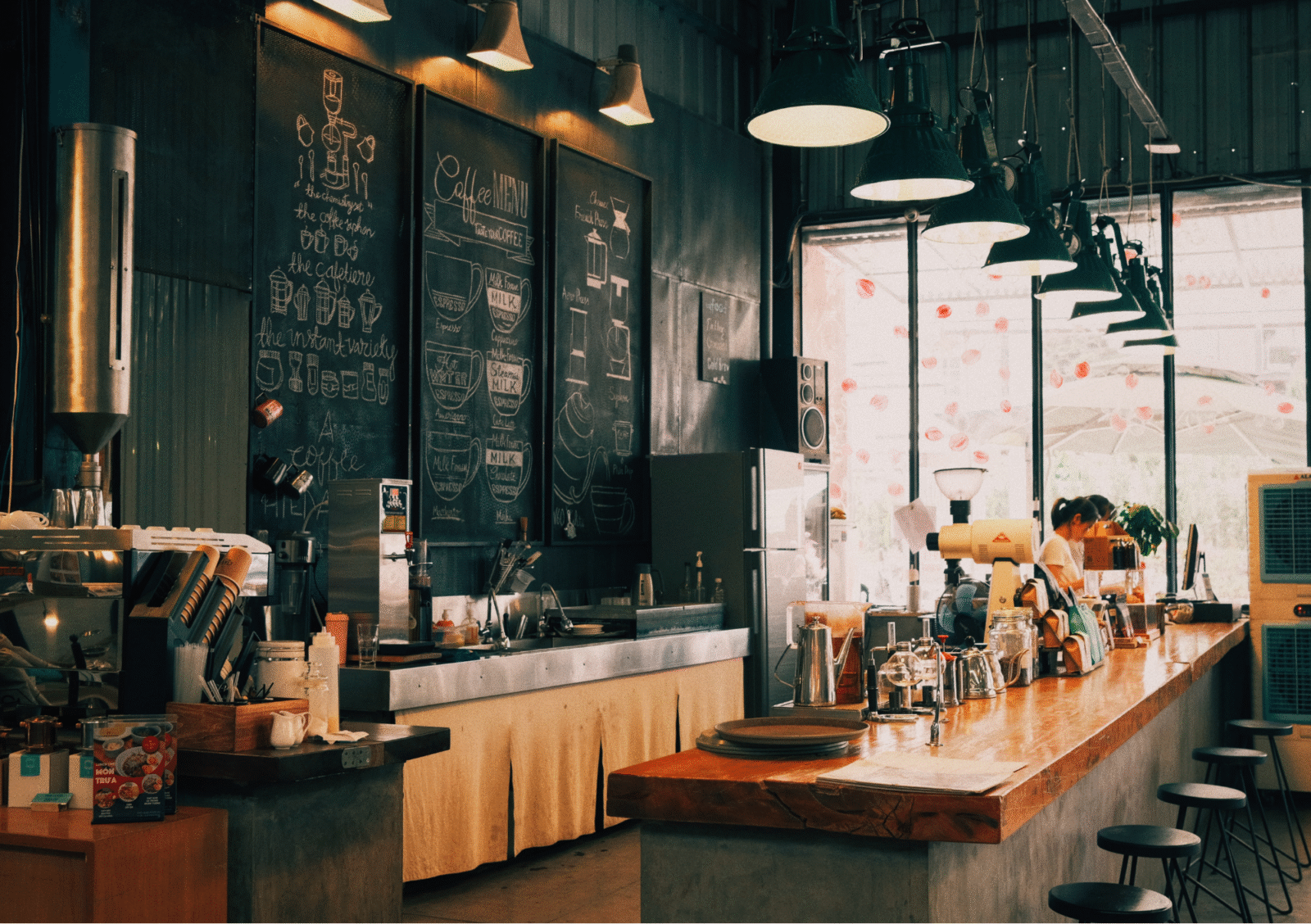
Cafés offer a mix of focus, light social presence, and flexibility that fits the way global founders actually work today.
For many professionals, work now moves between home, the office, coworking spaces, and what researchers call third places such as cafés and libraries. For global founders, this shift is even more pronounced, especially when their work connects multiple countries.
One study on remote work and socialization after the pandemic found that about 22 percent of people who expect to work mostly remotely plan to spend part of their work time outside the home. Among those who plan to work elsewhere, almost a quarter expect to work in a coffee shop, or restaurant.
For foreign founders in Korea, this is visible on any weekday in Seoul. Cafés are full of laptops, video calls, and documents spread across small tables. These places become an informal second office where global work happens from a seat by the window.
Cafés as a third place
Urban sociologist Ray Oldenburg introduced the idea of the third place. Home is the first place and the formal workplace is the second. Third places are informal public settings that are easy to enter and where people spend time, talk, read, or simply sit without a strict agenda.
Writing about these spaces, Oldenburg and later commentators argue that third places support everyday community life and individual well being. They offer relaxed contact with others and a sense of belonging that does not depend on status or job title.
For global founders, this has a particular value. When you live and build a business abroad, your closest relationships may still be in another time zone. A regular café, where staff recognize you and you start to notice other regular customers, becomes a small but steady point of reference. Inside that room you are not the official representative of your company. You are simply another person working.
Third places give founders focus, variety, and a sense of company in one setting.
Why background noise helps thinking
Many people assume that silence is the best condition for focused work. Research paints a more nuanced picture. Several experiments on ambient noise and creative cognition show that a moderate level of background sound, around 70 decibels, improves performance on creative tasks compared with quieter environments around 50 decibels. Very loud conditions around 85 decibels, on the other hand, tend to harm performance.
That moderate range is close to what you find in a busy café. There is music, movement, and low conversations, but none of these demand direct attention. For founders, this makes cafés a useful setting for strategy work, content creation, and idea generation. The environment keeps the mind active without overwhelming it.
The popularity of apps and websites that simulate coffee shop noise reflects the same insight. Many remote workers try to recreate the sound of a café at home because it helps them think more clearly.
Light background noise often supports creative thinking better than complete silence.
Third places and the structure of the workday
Third places are not only about social contact. Recent work on hybrid and remote workspaces points out that public locations such as cafés, coffee shops, coworking spaces, and libraries have become part of the practical toolkit for people who want variety, human presence, and different types of focus throughout the day.
Findings from a study on third places as alternatives to working from home suggest that these environments are particularly good for deep individual work, creative thinking, reading, handling administrative tasks, email, and small meetings.
Founders use this flexibility in a deliberate way. One café might be the place where they do planning before the first call with Europe. Another might be where they handle email and routine tasks. A third might be the quiet spot they choose when they need to write something important without interruptions. Over time, each place becomes associated with a different mode of work.
This blends well with simple rituals. The same drink, the same type of seat, the same time of day. These are small choices, but they give psychological structure to a role that often feels unpredictable. For a founder who is managing teams or clients across several time zones, that structure helps reduce mental load and decision fatigue.
Quiet company in an intense role
Entrepreneurship is often described as lonely work. Founders deal with financial risk, people decisions, and strategic uncertainty that they may not want to place on family and friends. Third place research highlights one form of support that is easy to overlook. Being physically around other people, even without speaking to them, reduces feelings of isolation and supports emotional well being.
In a café you are surrounded by students, freelancers, remote employees, and other business owners. Everyone is working on something. No one expects conversation, yet there is a clear sense of shared effort. For foreign founders in particular, this kind of low commitment social presence can make long work sessions more sustainable.
At the same time, the intensity of remote work in coffee shops is changing how some café chains operate. In South Korea, for example, Starbucks has introduced signs that ask customers not to bring in full office setups with desktop computers, printers, and power strips, and encourages people to share large tables. The company wants to accommodate laptops and light studying while limiting more permanent office style use.
This illustrates how common it has become for people to treat cafés as workplaces and how founders fit into a broader shift in how cities use these spaces.
Laptops have become part of the regular landscape of the city.
A practical part of the founder lifestyle
When you put these pieces together, the logic is clear. Professionals in general are building cafés into their weekly work pattern. For global founders, who often live abroad and operate across markets, the case is even stronger.
Cafés combine environmental conditions that support creative thinking, a neutral setting with lighter role expectations, predictable small rituals, and a form of quiet social contact that softens the intensity of the role. They are not a replacement for an office or a home base. They function as a flexible second office that fits the way modern founders actually work.
For many of the entrepreneurs, a significant part of building a global business has happened at café tables. Ideas are refined, decks are finished, and difficult decisions are thought through while the espresso machine runs in the background. In a work life shaped by uncertainty and movement, that kind of reliable everyday space earns its place.
Article by The Global Founder Editorial Team.




Leave a comment