


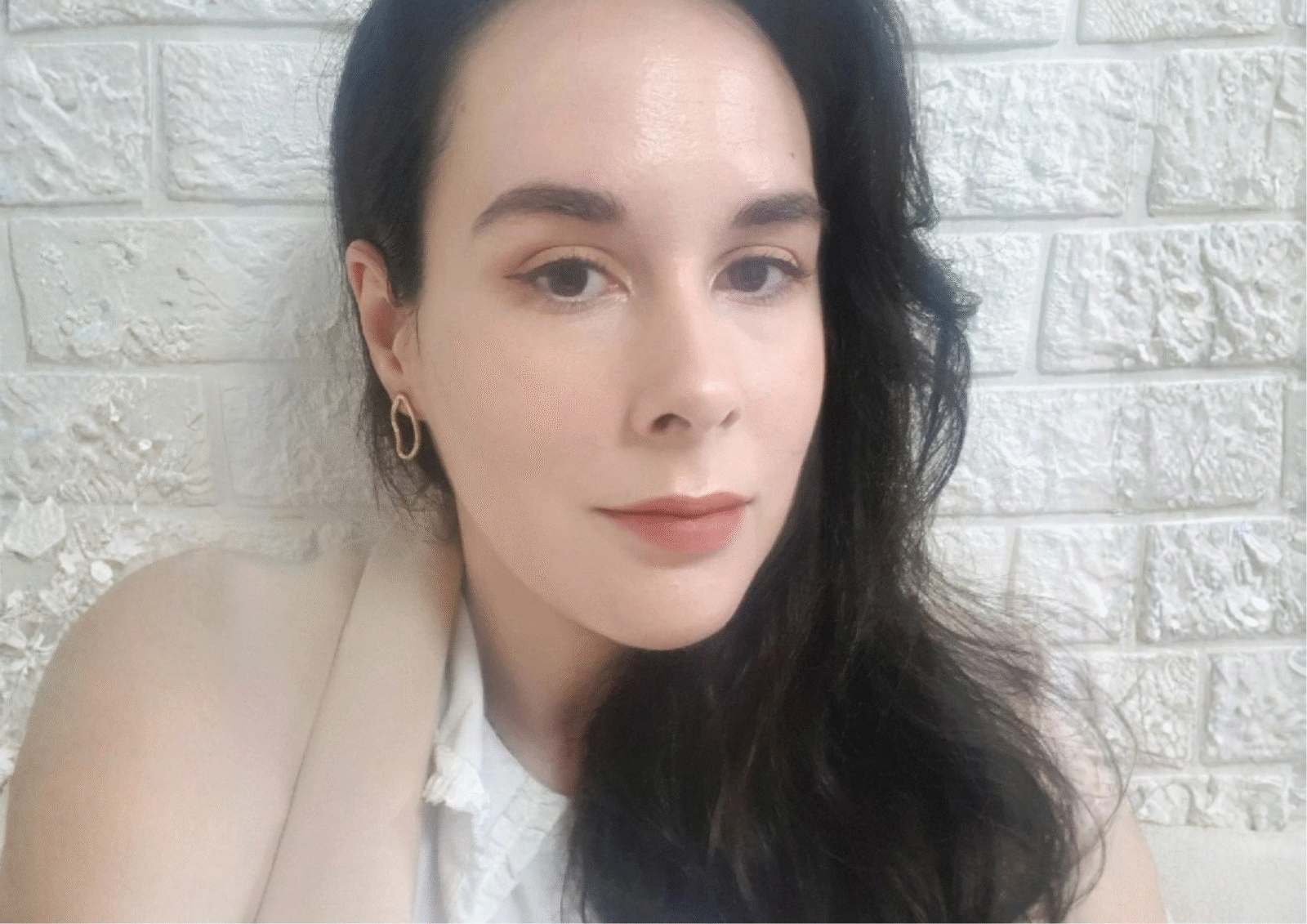
From discovering Korean cosmetics in Myeongdong to founding TANIT Overseas Connections, Elvira Tur López shares how passion, persistence, and cultural fluency helped her bridge Korea’s beauty industry with the world.
From a teenage K-pop fan discovering Korean cosmetics in Myeongdong to becoming the founder of TANIT Overseas Connections, Elvira Tur López has built a career on bridging Korea’s beauty industry with global markets, starting her business amid the turbulent times of COVID-19. Her story reflects not only the rise of K-beauty but also the persistence required to navigate cultural differences, business misalignments, and the challenges of setting up as a foreign entrepreneur in Korea. In this interview, she shares her journey, the lessons she’s learned working between Korean and Western partners, and her vision for shaping the next chapter of K-beauty on the international stage.
At one of our first fairs, we had about 50 meetings – just to walk out with zero signed deals. But that didn’t discourage us; we knew we had to keep going, make ourselves seen, and build trust one step at a time.
Everyone has their own unique story about the start of their Korean journey. What about you -what brought you from Spain to Korea?
For me, the start of my journey to Korea was a bit random. My first-ever visit was in 2008, when I was a 19-year-old big fan of the Korean boy band TVXQ. On this trip, I went to Myeongdong with my friend, and back then, there were even more Road shops (stores for one brand only) than there are nowadays.
As we were going down the main street, you know how there are always staff outside trying to reel you in at each store, right? We were passing by one of the millions of such stores when two staff members just grabbed us both and pulled us into the store while shoving a sample kit into our faces.
At first, I was very confused trying to understand what just happened. But then I started looking at the products, trying them on, and buying some with the limited money I had at the time. And I fell in love with how different and innovative they were in comparison to the brands I had access to back in Spain. That was the start of my journey towards Korea.
From a visitor to an entrepreneur is quite a shift. How did you decide to build a business here?
I built my company back in Spain and amid the pandemic, in November 2020. Gradually, I moved it here, to Korea, because I saw it as the right next step to root our base locally and continue bridging Korea’s beauty industry with global markets as a curator for emerging brands straight from the source to clients worldwide.
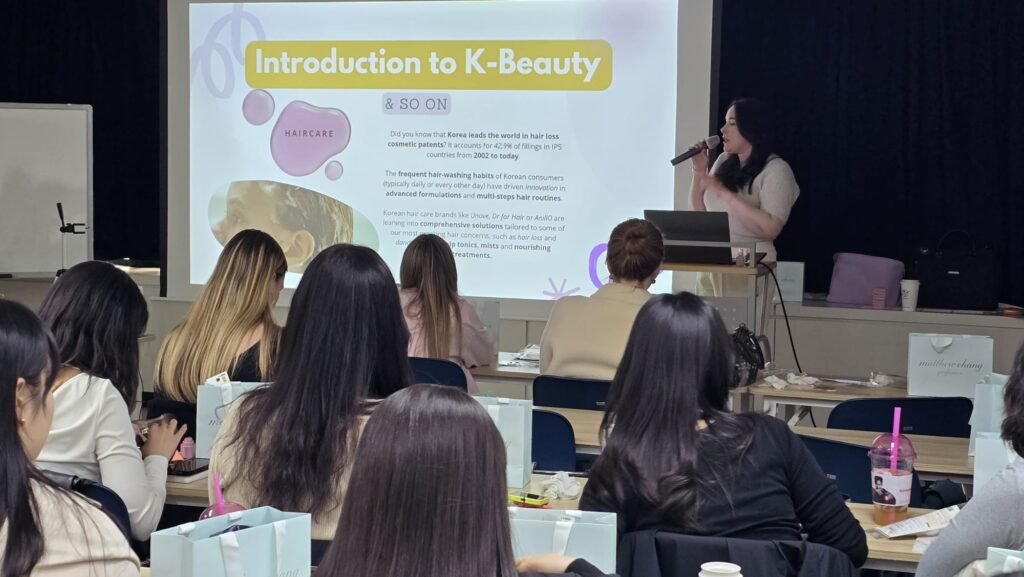
What made you choose the K-beauty industry? Was there a particular moment or experience that made you realize its global potential?
It started with that first exposure to Korean cosmetics back in 2008 and has since grown into a personal interest in K-beauty. I was probably one of the first people in my tiny island in Spain to buy the famous Misha and Lioele’s BB creams online, although the shipping fees were insane back then. But that is how much into it I was.
In my professional experience, I was able to work as an advisor in the early 2010s to bring these brands to distributors in the South of Europe and build Road Shops. It was a huge success that allowed me to learn early on and connect with the buyers I still work with today. I remained an independent advisor while I was working on other projects.
Then the pandemic happened, and, like everybody else, I lost my job. It was a hard time for me and my family, but after a couple of months, I got an email invitation from a colleague to Cosmoprof Hong Kong 2020 – it was going to happen online due to the circumstances. That’s when I thought to myself that this could be an amazing opportunity to turn my advisor role into a full-time position. It required almost no expenses at the start, and I was pleasantly surprised to see that the K-beauty industry hadn’t stopped or even been affected by the pandemic. Just the opposite – it was flourishing.
Setting up as a foreign entrepreneur in Korea comes with its own challenges. What obstacles did you face when establishing TANIT Overseas Connections?
I’m in the process of moving my company to Korea, so I am currently facing a few obstacles. Regarding visas, even though now it is much better than before, Korea is still very strict in terms of who gets their visa approved and who doesn’t. For example, in my case, I don’t have a university degree as I started working when I was 17 years old. That alone takes out half of the visas I can apply for. Or, there is an investor-type visa, which is granted to you if you invest around 300K USD. With that visa, later you can establish either a subsidiary or move your HQ into the country. But neither of them works for me. However, right now I’m figuring out the documents for the marriage visa as I’m marrying my fiancée this year.
In our case, our specialty is bridging the cultural and business gap between countries and companies. Understanding each part and implementing a solution is our expertise.
How did you establish trust and credibility with Korean brands as an intermediary?
When I started my intermediary agency, it was a new concept. So building trust with potential brands was a must. It was quite challenging: I remember how at one of our first fairs, we had about 50 meetings – just to walk out with zero signed deals.
But that didn’t discourage us; we knew we had to keep going to trade events and fairs to make ourselves seen and make ourselves familiar to potential clients. After half a year of continuous working, we got our first deal with a very small Korean skincare brand.
K-beauty is a competitive and fast-moving industry, and this is seen through your experience. How did you position TANIT Overseas Connections to stand out? And what worked well in introducing Korean brands to overseas markets?
Our business concept is quite unique, and we cover diverse and interesting distributors and regions. We focus on bridging Korea’s beauty industry with trusted partners abroad, ensuring our eye for emerging brands is precise and reliable for both buyers and brands. That core is what makes us stand out.
In our case, our specialty lies in bridging Korea’s beauty industry with global markets, helping brands and distributors understand each other’s needs.. Understanding each part and implementing a solution is our expertise. Because we work with emerging brands, our most effective approach was working with K-beauty distributors to create a demand and then pitch them to their target B2B customers.
From your experience, what do foreign distributors or partners misunderstand most about Korean brands?
Since the two sides work in opposite regions and cultures, their strategies are mostly misaligned, often leading to misunderstanding. Overseas distributors see an emerging brand and think their strategy for that brand should be making a long-term plan with no big sales, instead preparing the ground for gradual expansion in the first three years..
Emerging brands, on the other hand, often expect quick results. They push for high minimum order amounts (MOA) and aggressive marketing campaigns to secure target retailers within the first year.
Naturally, these two approaches do not match well with each other. That’s why we focus on finding a middle ground in each case.
Working between Korea and international markets requires cultural fluency. What differences have you noticed in how Korean vs. Western companies approach partnerships?
Beyond what I mentioned earlier, their core systems and operating models differ significantly. For example, many Korean companies prioritize securing key retailers within a specific timeframe. But their Western counterparts often focus first on building brand identity and strengthening marketing before pushing for retail expansion.
How do you adapt your communication and negotiation style when dealing with stakeholders across different countries?
As you can see, there is a lot of misalignment happening between Western VS. Korean approaches to business or negotiations. It doesn’t mean that either of them is wrong; it is just the way they are used to working.
When misunderstanding appears, we step in – with any of the parties’ approval – and work on bringing both to a neutral point so they can start or continue their business relationship on a common ground. Naturally, sometimes there are also situations where we don’t reach an agreement. In such cases, we have to move on to the next client.
For other entrepreneurs or agencies looking to work with Korean brands, what are the key things they need to prepare before approaching the market?
Patience, patience, patience. Being strict about your policies. And patience again.
K-beauty is a very young industry, and it is very exciting that we are part of it now, seeing it unfold in front of us. But it also means that there is no playbook, so both sides are running with their heads cut off and just landing by pure chance.
I would recommend that both sides sit with each other and truly understand each other’s work before moving any further. This way, you can be aligned with your business partner, allowing your cooperation to be much more productive.
Keep working on your idea. Flesh it out, squeeze as much inspiration juice as you can, and continue working on making it a reality!
What advice would you give Korean brands eager to expand globally but unsure how to start?
Contact us! Just kidding. But jokes aside, I would recommend focusing on your brand’s identity. Brainstorm it really well. What differentiates you from your competitor? Why did you launch this brand? What is your goal: long-term or short-term? All these may seem like very basic questions, but they are essential to start working on your sustainable expansion.
Are there common mistakes – on either side – that make cross-border collaborations harder than they need to be?
One of the mistakes I can mention here is probably being in it purely for the money.
Don’t get me wrong, we are all in a business to get paid, right? But it is a different story when you sell your brand in every channel possible, diluting its identity and presence in the market where it is being expanded – just having a purpose of getting as much revenue as possible. This can be mentioned for both sides.
Where do you see TANIT Overseas Connections in five years? Do you envision expanding into new sectors beyond K-beauty?
Right now, we are working with brands across all categories: skincare, makeup, haircare, bodycare, and perfume. Our next goal is to officially open our office in Seoul this year, and we are currently very close to this milestone. Another goal is to continue hiring more people to our team, keep up with creating events, participating in fairs, and later – expanding into lifestyle and fashion categories.
What impact do you hope your work will have on bridging Korea with global markets?
I hope we can continue bridging Korea’s beauty industry with global markets, helping as many of our partnered K-beauty brands as possible.
I love Korea and its beauty industry, and I firmly believe they are going to be very big with our help, which in turn will solidify our name as the curator of K-beauty for both brands and buyers. That’s the impact I hope to achieve with TANIT, and for that, we need to keep working hard.
Finally, what’s one piece of advice you would give to aspiring entrepreneurs who want to build a cross-border business like yours?
Keep working on your idea. Flesh it out, squeeze as much inspiration juice as you can, and continue working on making it a reality!
Connect with Elvira
To learn more about Elvira Tur López’s work connecting Korea’s beauty industry with global markets, visit TANIT Overseas Connections or connect with her on LinkedIn.
Interview by Vasiliki Panayi, Founder & Editor-in-Chief of The Global Founder.






Leave a comment